During-effort fuel · gel · reviewed 26 Aug 2026
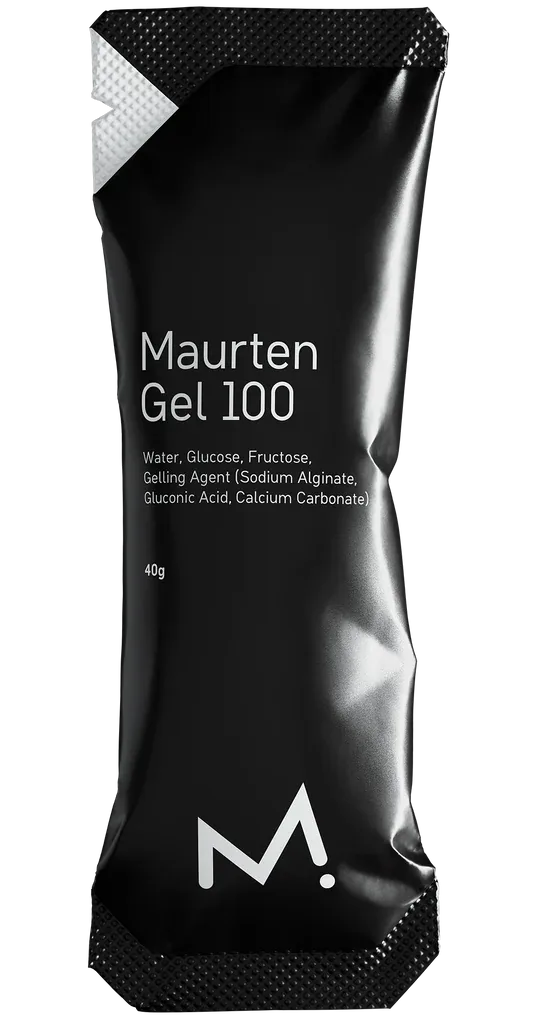
Maurten Gel 100 47
The best carbohydrate ratio you can buy, at 2.4 times the price per gram of the gel that matches it. What you are paying for is not the ratio.
Score breakdown
Each dimension below is scored 0 to 100 against a fixed scale, not against the rest of the catalog, so adding a product never moves this number. The overall score is the average of the dimensions this product declares data for. How the scales are set →
Comparison
5 of 38 gels heldPrices per single sachet at the cheapest box size we track. Best in green, worst in red, across the gels shown.
| Measure | Maurten Maurten Gel 100 | Science in Sport SiS Beta Fuel Gel | Precision Fuel & Hydration Precision Fuel PF 30 Gel | NEVERSECOND NEVERSECOND C30 Gel | GU Energy Labs GU Original Energy Gel |
|
|---|---|---|---|---|---|---|
| Overall scoreAn average of the various variables measured. | 47 | 58 | 49 | 42 | 33 | |
| CarbohydrateHow much fuel one sachet carries. | 25 g | 40 g | 30 g | 30 g | 22 g | |
| Glucose : fructoseGoverns how fast you absorb it. More fructose, higher ceiling. | 1 : 0.8 | 1 : 0.77 | 1 : 0.5 | 1 : 0.5 | ~ 1 : 0.47 | |
| SodiumAgainst 400 to 1000 mg an hour typically lost in sweat. | 20 mg | 30 mg | not declared | 200 mg | 60 mg | |
| ProvenanceWhether that ratio is read off the panel, computed from it, or inferred. | Stated | Derived | Stated | Stated | Estimated | |
| Price per sachetWhat one costs. Not comparable across sachet sizes. | $3.75 | $2.50 | $3.12 | $3.50 | $2.00 | |
| Cost per gramThe only price that compares across sachet sizes. | 15 cents | 6.3 cents | 10.4 cents | 11.7 cents | 9.1 cents | |
| Sachets for 90 g/hrHow many you open an hour to hold a 90 g/hr target. | 3.6 | 2.3 | 3.0 | 3.0 | 4.1 |
Verdict
what it does · what it costsWhat it does well
- 1:0.8 glucose to fructose, the blend that supports the highest sustainable intake rates.
- Six ingredients. The cleanest label in the category.
- The ratio is published by the manufacturer rather than left to be inferred. Almost nobody else does this.
- 25 g of carbohydrate declared as 25 g of sugars. Nothing hidden behind a polymer name.
- Neutral in taste and texture, which matters more at hour four than anyone admits at hour one.
What it costs you
- The most expensive way to buy a gram of carbohydrate that we have measured.
- 25 g a sachet means 3.6 sachets an hour to hold 90 g/hr.
- 20 mg of sodium is negligible. You need a separate sodium source, and in heat that is not optional.
- The hydrogel mechanism does not have independent support. Two controlled trials found no difference in glucose oxidation or gut comfort against a standard carbohydrate drink.
Where to buy
Prices and links as last checked. The price next to the name above is per unit at the cheapest box size we track; a single-unit price below may run higher.
Who this is for
the numbers, appliedThe field tells you what it is. This is who should act on it.
Worth the money if
- You have a demonstrably difficult gut and have already found that this one works. That is a real reason and it is worth paying for.
- You race short enough that the total spend stays small.
- You already carry sodium in a bottle or in tabs, so the 20 mg does not matter.
Look elsewhere if
- You are fuelling long. Across an Ironman bike leg the difference against Beta Fuel is roughly $40.00 a race, every race.
- You want the ratio and nothing else. You can buy an equivalent ratio for less than half the price per gram.
- You are racing hot and this is your only fuel.